
The 3 second hierarchy rule
The 3 second
hierarchy rule
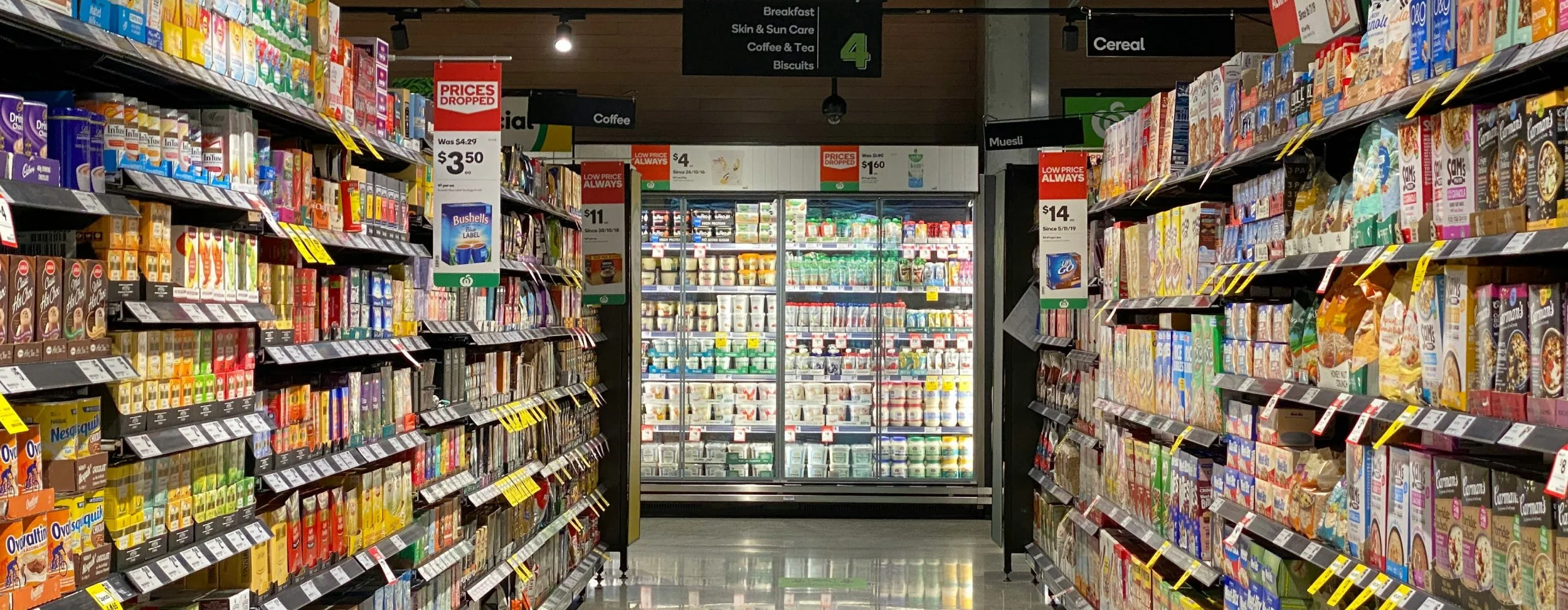
Packaging needs to work fast. So the consumer's brain can process it while walking down the grocery aisle.
Customers don't study packaging.
They scan.
And in that scan, information doesn't land all at once. It lands in a sequence, whether we design for it or not. So we may as well design for it deliberately.
0-1 seconds: Who are you?
This is the master brand logo and DBAs doing their job before anything else gets a chance. "I'm a trusted brand." That's it. That's all the shopper needs at this point, and all they have time for.
1-2 seconds: What are you?
Category codes, pack format and structure step in next. "I'm a premium soup." The shopper hasn't read a word yet, but the shape, the colour, the finish has already told them which aisle they're standing in and what kind of product they're holding.
2-3 seconds: Which are you?
Clear variant navigation. "I'm pumpkin flavoured." Now we're in choice mode. The shopper already knows they want soup. The only job left is helping them find their soup, quickly, among six others just like it.
3+ seconds: Why you?
Claims and USPs. "I'm low in fat." This is the only tier that gets any real reading time, and only from shoppers who've already decided to pick the pack up. Everything before this point was the reason they picked it up at all.
Here's where most packaging goes wrong. Every one of those four questions gets asked in the same visual breath. Same size type. Same visual weight. Same level of shout.
If everything's fighting for attention in that first second, the brain doesn't know what to process first. So it defaults to what's easiest to understand instantly. Usually that means falling back on whatever looks most familiar, most safe, most expected.
Hierarchy isn't about deciding what's most important and making it biggest. It's about respecting the order in which a shopper's brain actually wants the information.
Who you are earns the first second. What you are earns the next. Which variant earns the one after that. Why you earns the rest, for the shoppers who've already said yes to everything before it.
Get the order right, and the pack does the selling before the shopper even realises they've been sold to.
Get it wrong, and even the most beautiful pack on the shelf becomes noise.